

Why Business Networking Sucks
Human Written


And 5 Secrets to Making it Awesome
And when business professionals keep showing up at networking events pitching to others who are too, they get burned out quickly. They lose hundreds of dollars each month with no ROI. Pretty soon they give up on networking all together.
But - there is a way to network correctly. There's actually five secrets to improving your networking skills so that you and the other hunters are collaborating to get more customers. These are proven, tested networking skills that you can apply at the business mixer that you're going to tonight, or the event you have next week.
So pull out your phone and let's try these out together.
Networking Sucks Because People Are There For Themselves.
Everyone attending is trying to sell their business. That sucks. Because hunting the hunters will never provide you game for surviving.


Don't try meeting everyone. Focus on making 10 solid introductions with ten different people. That's it.
These intros should be short and no more than 2-3 minutes each. You'll have later opportunities for longer conversations.
In these conversations you're trying to do three things:
Get a vibe for their personality - if there's no rapport, don't pursue it. If there is, keep talking with them.
Get a feel for their passion - do they seem bored about their business? Move on. Do they feel passionate? Interesting. Keep talking.
Their value for others - are they curious about you or just themselves? If they seem to be genuinely interested in you, stick around.
Here's why this exercise is important for better networking: You're sifting out the people you don't vibe with.
Don't get stuck chatting with someone for 20 minutes where there is no connection. For both of your sakes, move on by saying "Thanks for chatting! I'm going to make my way around the room now. Nice to meet you!"
But as you make these quick intros, there will be 3-5 people who stand out. When you find them, move on to secret two for awesome networking:
Focus on 10 Introductions Only




Only spend extra time with people where there's a mutual connection. These are the ones to invest your energy into.
A connection conversation should be 5-7 minutes. You must keep it shorter so you have time to mingle with others. Again, you'll have time for longer conversations with them later.
The fun part about these connections is you get to choose what to talk about. But there are three things you have to do before excusing yourself:
Ask if they're open to scheduling coffee - one-on-ones, or coffee follow-ups, are your opportunity to have a longer conversation. If they say yes:
Get your calendar out and book it - don't wait until later. Have both of you look at your calendars and decide on a day and time to connect further.
Exchange business cards - Only ask for a business card after you've scheduled a coffee. You want your business card collection to be quality leads, not useless clutter taking up space on your desk.
It's important to remember this about coffee follow ups: they are not sales conversations, for either of you. Don't use this time to sell your product.
Instead, use this time to go deeper in understanding more about the other person. Ask them to share their story. Ask they they're passionate about their work. And hopefully that rapport continues on.
If there continues to rapport, ask them "would you be open to having a later conversation about how we could collaborate with each other to help our business grow?" If they say yes, then schedule a separate conversation and move on to step three:
Invest in 3-5 Connections




For the quality business professionals you like and trust, have a second conversation about referring each other.
Guys - this is what networking is all about! The power of networking is building collaborative relationships where each person is referring one another.
This isn't a legal binding or contractual agreement. It's a laid back but intentional conversation you have with the person over coffee where you both agree on the following areas:
Social media engagement - One per month, you'll either recommend their service online or share a post for them.
Prospect introductions - if each of you knows someone who could use the other's services, you'll send an introductions text.
Meet quarterly - Both of you will try to meet for coffee every few months to check in and see if the collaboration is working out.
If this is sounding like a lot of work - especially all the coffee appointments - it's really not. If you do this correctly, realistically you'll get maybe one collaborative partner out of every networking group you attend.
So if you attend five networking events each month, you'll probably get about five quality referral partners.
Why should you focus on referral partners to collaborate with? Because that's how you'll make your ROI over time. Not by selling to other businesses, but by exchanging referrals. And you can only do that with people you know, like and trust.
Make a Collaboration Agreement




Network sucks if you're not great at connecting with people. To make it awesome, you have to improve your "people-ing" skills.
Whether you're an introvert or extrovert, charismatic or melancholy, these five people skills will help make networking easier and relaxing.
They'll even help you become a more interesting person so others will want to connect with you! Here they are:
Hold a drink in your hand - hand visibility in social settings matters. If you keep them in your pocket, it makes the conversations feel closed off. Holding a drink forces one of them to stay visible while staying natural.
Break the ice first - Don't stand on the edge of the room and wait for people to connect. Go to them first. You can either introduce yourself to people standing alone or busy having a conversation with someone. It's okay to insert yourself into a conversation if the context is right.
Use These Five People Skills




Facing out
If two people are talking and facing outward, this is an unconscious social cue for you to introduce yourself and join the conversation.
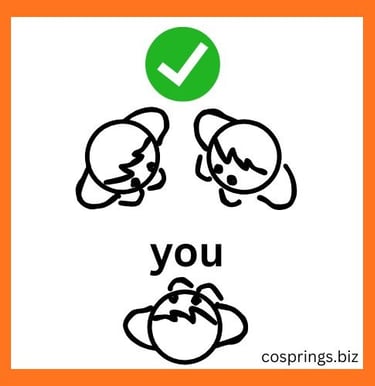
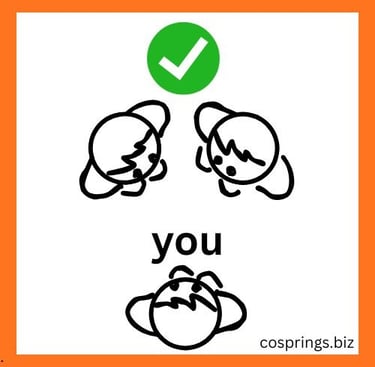
Facing each other
If two people talking directly toward each other, it's a cue they are having a personal conversation and not to bother them just yet.
Ask interesting questions - It's fine to ask "what do you do?". But why not make it sound more interesting by asking "Tell me about your business and what kind of customers you serve"? Below are some good questions to ask:
What made you go into that industry?
How has the economy been treating your business?
What do you enjoy doing outside of your business?
What are your favorite networking groups?
Sorry for asking so many questions - what would you like to know about me?
Practice a curious state - Most businesses professionals at a networking group are so focused on how they're coming off to the other person, they're not even listening to all that's being said. Practice getting yourself into an attentive state where you're genuinely curious about what's being shared with you.
Use facial mirroring - this isn't complicated. You just mirror the same expression the other person does to help them relax more. When they're relaxed, you'll be too. Have you ever laughed at something and the person talking to you didn't? Remember the awkward moment it created? Facial mirroring simply helps the other person feel more comfortable.
Another important social skill for some people to pay attention to is there talking pace. It's okay to be the one to do some talking. But don't dominate the conversation.
Some people have a hard time winding down their talking because they're nervous and talking is actually a coping mechanism.
Pace yourself. Practice being conscious of how many minutes it's taking you to finish a thought, and make sure the other person is having enough time to talk too.


You probably don't need this last secret. But it has helped others who struggle with networking.
Because when you enter the networking game with the wrong mindset, it will suck. For some people, making it awesome and successful requires reframing five perceptions that have about it.
After these mental shifts, networking becomes much more rewarding.
Shift One - Accept that networking isn't where your customers are
Even if you're a B2B brand and the people at the event NEED your service, they're not your customer. Remember, people are there to sell themselves, not to buy from others.
Shift Two - Realize that networking is where your potential referral partners are
The biggest ROI in networking is hopefully connecting with others who you know, like and trust and helping promote each other and exchanging referrals.
Shift Three - Lean into the social sharpening you're getting
Even if you don't meet a lot of great people you vibe with, social interaction is a healthy way to get better at communication, listening, asking questions and practicing curiosity
Shift Four - Know that no one is going to make the first effort
If you want to give your card out, schedule coffee or set up an intentional referral agreement, the truth is no one else will make it happen for you. No matter what, you always need to make the first move.
Shift five - Understand that going first is a gift to the other person
No one likes to introduce themselves first. If you're an extrovert it's easier, but we'd all love to have other people approach us first. So why not be someone's hero? Make their day by not making them be the first one.
Practice 5 Mental Shifts



You're Invited!
Free Pancake Networking Breakfast
1st Tuesday each month, 8:30-10am
COS City Hub, Colorado Springs, CO